
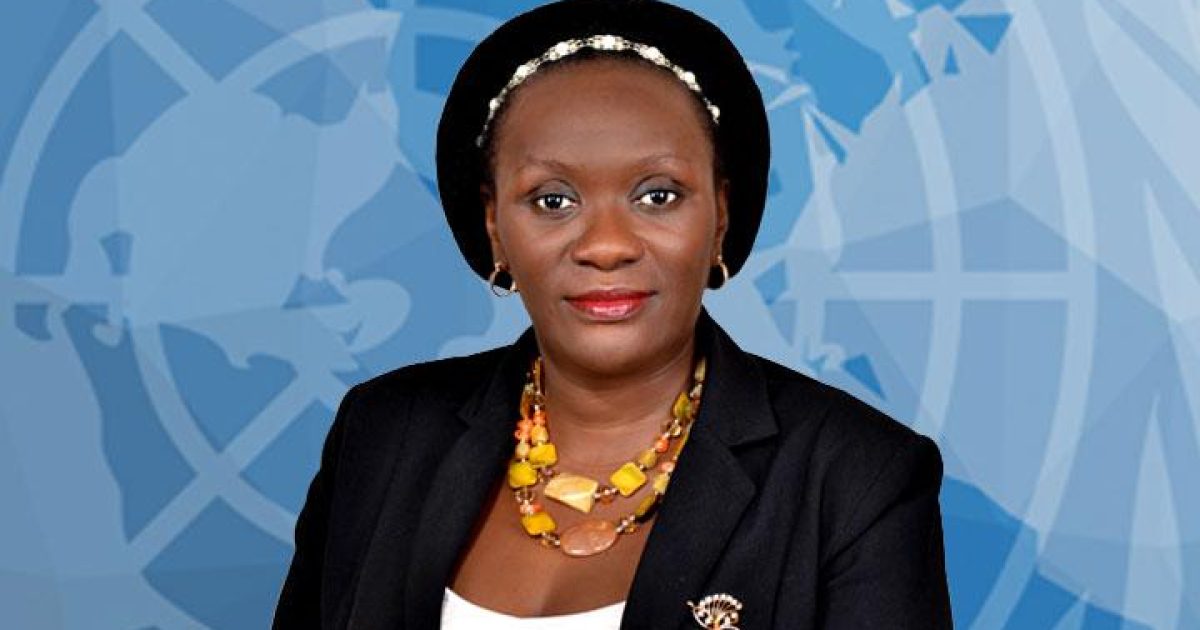


Lydia Mugambe, a Ugandan lawyer who served as a High Court Judge in Uganda beginning in 2013 and as a Judge of the UN International Residual Mechanism for Criminal Tribunals (IRMCT), the successor body to the International Criminal Tribunal for Rwanda, since May 2023, was convicted on 13 March 2025 at Oxford Crown Court on four counts: conspiracy to facilitate a breach of UK immigration law, arranging travel with a view to exploitation, requiring a person to perform forced or compulsory labor, and conspiracy to intimidate a witness.
She was also a fellow at Columbia University’s Institute for the Study of Human Rights in 2017. She was studying for a doctorate in law at Oxford University at the time of the offences.
Mugambe had met the victim in Uganda when the victim was 19 years old and employed her there as a nanny and maid.
When Mugambe relocated to the UK on a Tier 4 student visa, a category that did not permit her to sponsor a worker, she arranged to bring the victim to continue in that role.
Because she lacked the legal right to sponsor a visa, she conspired with John Leonard Mugerwa, then Deputy High Commissioner of Uganda to the UK, who agreed to sponsor the victim’s entry under a diplomatic servants scheme.
False employment contracts and a false Certificate of Sponsorship were created stating the victim would work as a paid housekeeper at the Ugandan diplomatic residence.
The intention from the outset was that the victim would instead live and work unpaid at Mugambe’s private home.
The quid pro quo for Mugerwa’s participation was that Mugambe would assist him in a court case in Uganda in which he was a defendant.
The sentencing judge found that Mugambe made multiple attempts to contact the Ugandan judge handling Mugerwa’s case, and that judge refused to take her calls.
Mugambe later told Mugerwa that the judge had not returned her calls because the judge “fears talking on the phone.” The court treated this statement as evidence that she was aware the contact was improper.
Mugerwa was not charged because the Ugandan government declined to waive his diplomatic immunity, despite the Crown Prosecution Service having authorized a conspiracy charge against him.
Once in the UK, the victim was required to cook, clean, and provide childcare without pay, receiving only food and board. Mugambe confiscated the victim’s passport and biometric visa card.
Over time, Mugambe increasingly restricted the victim’s ability to take outside employment when it conflicted with domestic demands.
The victim eventually recovered her documents and contacted a friend, who alerted police. Officers received a tip on 10 February 2023 that a woman was being held in servitude at Mugambe’s home in Kidlington, Oxfordshire.
After her arrest, Mugambe violated her bail conditions by organizing attempts to contact the victim through her niece, a legal researcher, the victim’s pastor, and the victim’s mother. Messages recovered from electronic devices seized in August 2024 documented the scheme.
In one message, Mugambe instructed that the victim’s mother should “convince her to stop betraying us.”
In another, she wrote that if the victim told police she had dropped the matter, “they have no case to take to court.” The trial at Oxford Crown Court ran from February to March 2025.
At sentencing on 2 May 2025, Judge Foxton assessed Mugambe’s culpability as medium, noting significant planning and premeditation but finding this was not a case involving a criminal hierarchy.
Harm was assessed at Category 3: the victim suffered psychological harm and ongoing fear, and the exploitation ran for approximately eight months.
The judge found no remorse and noted that Mugambe continued to characterize herself as the victim. He described her account to police and to the court as “thoroughly dishonest.”
Mitigating factors included the absence of prior convictions, a record of public service, including the Vera Chirwa Human Rights Award in 2019, character references from judicial bodies and fellow judges, the impact of imprisonment on her three children aged 8 to 17, and diagnosed mental health conditions, including major depressive disorder and anxiety disorders.
The judge acknowledged the adverse effects of prolonged separation on the children but found the mitigating factors did not justify reducing the sentence below what he considered the minimum commensurate with the offences.
The total sentence was six years and four months: five years and six months on the lead trafficking count, with concurrent terms of 18 months and three years on the immigration and forced labour counts respectively, and a consecutive ten months for the witness intimidation conspiracy.
Mugambe will serve up to one half of the sentence in custody, with the remainder on licence. She was ordered to pay the victim $15,300 in compensation and made subject to a restraining order prohibiting any contact with the victim until further order of the court.
The victim’s personal statement described living in fear and isolation in the UK, unable to return to Uganda to see her family, and unable to disclose the address of the safe house where she is staying, which has made it difficult for her to obtain employment.
The case attracted public comment in Uganda, some of it critical of the victim, which has been a source of distress. The victim was subsequently granted asylum in the UK.
The IRMCT waived Mugambe’s judicial immunity in July 2024 after becoming aware of the investigation and discontinued her participation in tribunal business.
Her profile was removed from the IRMCT website following her conviction. Mugambe has since resigned from the UN position.
The post UN Judge and Former Columbia University Fellow Convicted of Modern Slavery appeared first on The Gateway Pundit.