
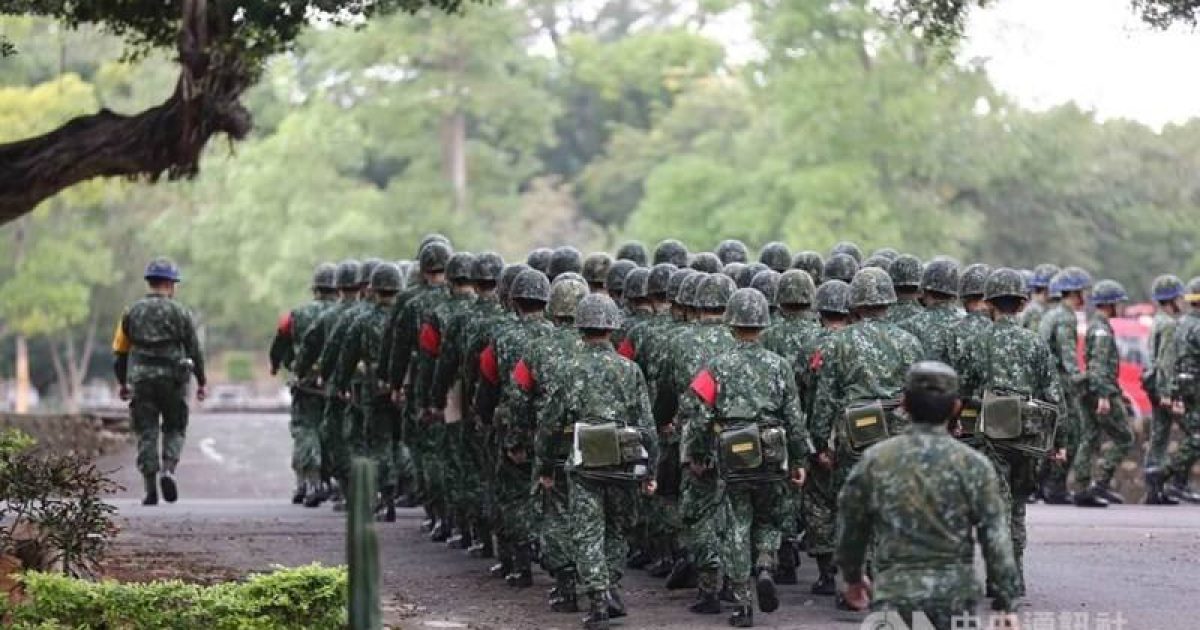


In response to Beijing’s tightening political control and leadership purges within the PLA in early 2026, Taiwan’s ruling Democratic Progressive Party has accelerated its $40 billion Special Budget for asymmetric warfare. Taipei views the consolidation of power under Chinese leader Xi Jinping as a shift from gray-zone coercion toward preparation for a potential 2027 invasion window. U.S. officials assess that the PLA is nearing the capability to conduct missile strikes, enforce blockades, and carry out a full amphibious invasion.
As of February 2026, Taiwan’s legislature, the Legislative Yuan, remains locked in a standoff between the ruling administration and opposition parties over two competing versions of the Special Defense Budget.
The opposition, Taiwan People’s Party, supported by the Kuomintang, would allocate approximately $12.7 billion over the same eight-year period, subject to annual review. By cutting the $27 billion difference, which primarily funds indigenous defense initiatives such as the T-Dome air-defense system, tactical software, and mass drone production, the opposition plan focuses almost exclusively on purchasing off-the-shelf American hardware. Without investment in a local defense-industrial base, as the DPP proposes, Taiwan would remain dependent on U.S. delivery timelines and long-term maintenance support.
Some critics, including U.S. lawmakers, argue that by slashing the budget, the opposition is attempting to avoid provoking Beijing, which could leave Taiwan more vulnerable and increasingly dependent on U.S. intervention if deterrence fails. Taiwan assuming a larger share of its defense costs aligns with the current U.S. National Defense Strategy, which emphasizes burden-sharing and expects partners in the First Island Chain, including Japan, South Korea, the Philippines, and Taiwan, to invest more in collective deterrence.
The strategy also highlights integrated deterrence, stressing that local partners must have the resilience to withstand an initial strike. The DPP’s emphasis on infrastructure, drones, and domestic missile shields fits this framework. Higher defense spending also serves as political signaling in Washington, where it is viewed as an indicator of Taiwan’s seriousness about self-defense. If Taiwan reduces spending while requesting stronger U.S. protection, it provides political ammunition to America First skeptics who question defending the island.
While Taiwan’s regular 2026 defense budget stands at approximately $31.1 billion, the central dispute concerns a separate special budget covering 2026 through 2033. Under the government-backed proposal, total spending would reach roughly $39.5 billion over eight years. The plan includes the proposed “T-Dome” air-defense system, large-scale drone fleets, expanded long-range missile capabilities, and mobile systems such as HIMARS, Javelin anti-tank missiles, and Altius loitering munitions.
The proposal calls for deploying more than 200,000 aerial drones and over 1,000 unmanned surface vessels, supported by a multilayered, AI-integrated missile-and-drone defense network designed to counter saturation attacks. The opposition has repeatedly blocked the measure.
This policy aligns with the Porcupine Strategy, designed to make Taiwan unswallowable in the event of invasion.
The opposition alternative, advanced by the Taiwan People’s Party and supported by the Kuomintang, is titled the “Special Act on National Security and Asymmetric Warfare Procurement.” The proposal narrows the scope of spending and focuses on five of eight major U.S. weapon systems.
It significantly reduces the scale and funding of the government’s broader asymmetric strategy and omits systems such as layered air defenses, expanded drone fleets, and integrated networked systems that many defense experts consider central to Taiwan’s defense needs. As of February 2026, the measure has advanced to committee for review.
Both proposals claim to strengthen asymmetric-warfare capabilities, but they differ sharply in philosophy and scale. The opposition plan retains certain asymmetric tools and supports purchasing U.S.-made missiles, yet reduces the overall package by roughly 70 percent. Kuomintang and Taiwan People’s Party lawmakers argue that the government’s request amounts to a blank check and lacks sufficient transparency.
They have removed funding for certain domestic research-and-development programs, including the T-Dome system, favoring specific, pre-approved U.S. arms sales and a more fiscally conservative approach. They also question what they describe as the astronomical costs of expansive indigenous drone and AI programs.
Many Americans are tired of the United States funding the defense of other countries, even close allies. By relying on the U.S. for defense, those nations can direct resources to other national priorities.
Countries such as Germany and Taiwan have historically kept defense spending relatively low, around 1.5 percent to 2 percent of GDP, allowing them to reinvest those savings into high-tech manufacturing, infrastructure, and research and development. By lowering their national overhead, these countries can produce goods such as semiconductors in Taiwan or automobiles in Germany more competitively than U.S. firms, which bear the high cost of maintaining a global military presence.
A lower defense burden also helps these nations sustain trade surpluses, which can influence the strength of their currencies, such as the euro or the New Taiwan dollar, relative to the U.S. dollar. This dynamic can make American exports more expensive and less competitive in global markets.
When countries refuse to spend adequately on their own defense, it raises questions about their commitment to taking responsibility for their security. In such cases, Americans may reasonably question why the United States should continue bearing a disproportionate share of the cost.
The post Taiwan Ruling Party Pushes to Shoulder Greater Defense Burden While Opposition Seeks Greater U.S. Dependency appeared first on The Gateway Pundit.