
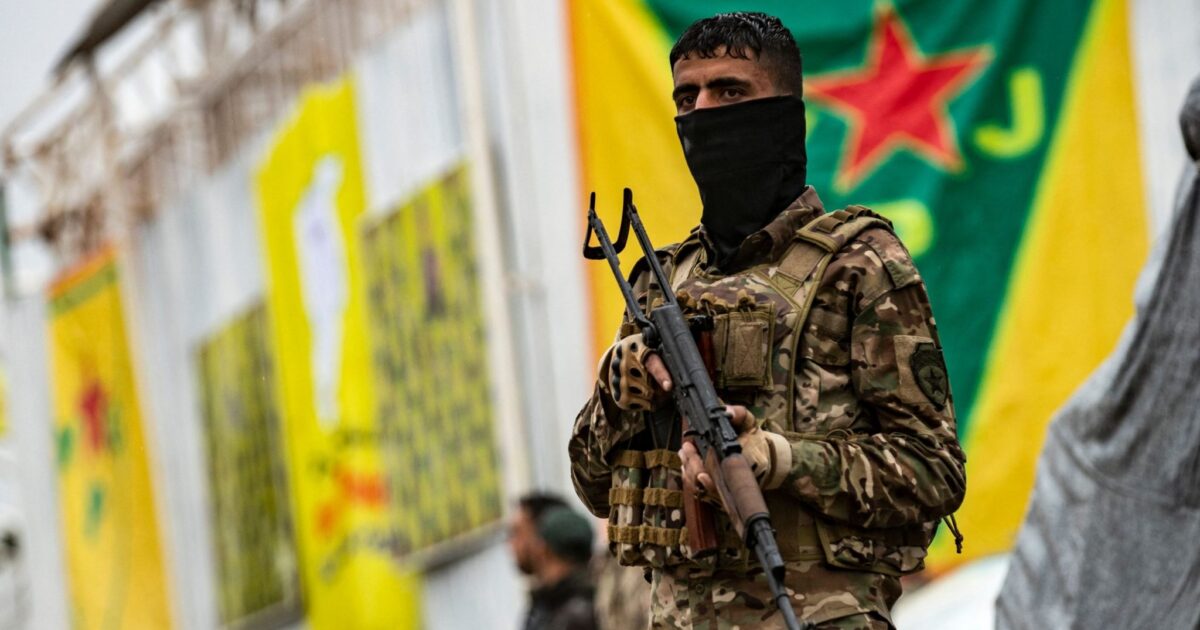


The Kurdish-led Syrian Democratic Forces (SDF) are beset on three sides. They face pressure from the Damascus government while working to preserve the freedoms of Kurds, Christians, and other minorities living in Rojava, even as they contend with the reactivation of ISIS cells and ongoing attacks by Turkish-backed groups.
The Syrian Democratic Forces released a report accusing Turkey of widespread violations and war crimes in the Kurdish-led autonomous region of Rojava in north and eastern Syria during the first half of 2024. According to the SDF, Turkish forces carried out sustained attacks using UAVs, warplanes, artillery, and heavy weapons across multiple areas, including Qamishlo, Kobani, Manbij, Ain Issa, Derik, Afrin, and al-Shahba’a, targeting civilian neighborhoods as well as critical infrastructure.
The report claims Turkish strikes hit power stations, oil and gas facilities, water infrastructure, agricultural lands, medical and aid facilities, and civilian vehicles, including double-tap attacks aimed at first responders and media teams. During harvest season, Turkish attacks targeted wheat and barley fields, burning thousands of hectares, destroying olive groves, and polluting rivers such as the Jagajag River.
The SDF documented 339 total attacks in six months, including 249 heavy-weapon strikes and 86 UAV or air attacks. It reported four civilian deaths, including a child and two women, 52 civilian injuries, six military deaths, and repeated strikes on villages, towns, and civilian cars. The report alleges attacks on humanitarian targets, including a Red Crescent vehicle and a medical facility in Qamishlo.
The SDF said Turkish operations caused prolonged electricity and water outages, particularly in Qamishlo and Hasakah, and accused Turkey of worsening humanitarian conditions. The group called the attacks a threat to civilian safety and regional stability and framed them as violations of international law.
At the same time, the new Syrian interim government, led by former al-Qaeda member Ahmed al-Sharaa, is demanding that the Kurds disarm and that the SDF be integrated into the Syrian national army. Damascus is interpreting the March 10 agreement between the two forces as a sign that a merger is imminent. However, a merger of the SDF into the Damascus army is unlikely for several reasons.
The SDF views the March 10 agreement as a partnership to build a new Syrian army together, not a surrender. SDF Commander Mazloum Abdi has stated that the force does not want to join the Syrian army but instead to help build it, with the SDF playing a central role. By contrast, both Damascus and Turkey are demanding that the SDF dissolve completely, with fighters absorbed individually rather than as intact units. Turkey has been explicit that the SDF’s chain of command must be broken entirely.
The SDF demands administrative decentralization and democratic local governance as part of any agreement. Damascus has rejected federalization and is pursuing a centralized government. SDF officials state that decentralization is a safeguard for Syria’s unity and stability, but Damascus views it as a threat that could open challenges from political elites across multiple provinces.
SDF Commander Abdi stated that no change has occurred in the mentality that ruled Syria under the Assad regime, saying Damascus still wants Syria ruled by only one group. The SDF has accused Damascus of having little intent to implement the agreement. Damascus and Turkey accuse the SDF of stalling. Both Damascus and Turkey have continued military buildups, with the SDF digging in, fully aware that fighting could escalate at any moment.
The SDF controls strategic assets including ISIS detention facilities, oil-rich areas, border crossings, and airports. The force remains hesitant to relinquish this autonomy. The SDF also insists on maintaining the independent structure of the Women’s Protection Units. Any integration proposal that dissolves these structures represents a threat to the SDF’s identity and organizational coherence.
Turkey demands not just integration but complete dismantlement of the SDF, viewing any preserved Kurdish military structure as a security threat. Turkish officials reject any model where the SDF retains operational autonomy under Syrian army command. This creates a gap between what the SDF will accept and what Turkey will tolerate.
SDF officials insist any military merger must follow political and institutional reforms that define the future governance system. They will only join formations based on democratic and representative principles. Damascus has not engaged on these political preconditions.
Key elements like the handover of Tishreen Dam remain stalled due to unresolved technical and security arrangements. Talks scheduled for Paris were cancelled. Former US Ambassador to Syria Robert Ford stated he does not see how Damascus and the autonomous administration will come to an agreement, calling the situation static with Turkey unable to serve as mediator.
It is ironic that the ambassador, or anyone else, would believe that Turkey could serve as a moderator, given Turkey’s active participation in the war against the SDF and the civilians living under their protection in Rojava.
Unless Damascus agrees to prevent Turkey from bombing Rojava, and unless al-Sharaa’s government implements significant changes in its policies toward the Kurds, women, Christians, and other minorities, and can credibly assure the SDF of the autonomy it demands, there is likely to be no resolution. The Kurds point to the massacre of Alawites earlier this year, which left more than 1,000 civilians dead. They understand that the only reason a similar atrocity has not occurred in Rojava is because the SDF has retained its weapons, while the Alawites had already surrendered theirs.
The post Kurdish-Led Syrian Democratic Forces Accuse Turkey of War Crimes as Merger Talks Collapse appeared first on The Gateway Pundit.