
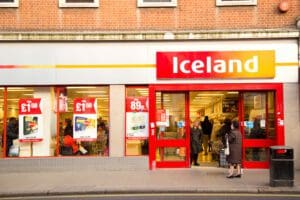

Iceland supermarket ends decade-long trademark battle with Iceland and offers ‘rapprochement discount’
The UK supermarket chain Iceland has formally ended its decade-long legal battle with the Nordic nation of the same name, drawing a line under one of Europe’s most unusual trademark disputes and promising a goodwill gesture to Icelandic consumers.
The frozen food retailer confirmed it would abandon further legal action after suffering its third defeat in European courts last year. Instead of continuing the costly dispute, the company plans to use funds earmarked for further litigation to offer what it has described as a “rapprochement discount” to shoppers in Iceland.
Richard Walker, the executive chair of the supermarket group, said the decision marked a pragmatic end to a legal fight that had stretched for nearly a decade and consumed significant time and resources.
Speaking to the Financial Times, Walker said the company would redirect the money that would have been spent on another legal appeal toward offering shopping vouchers to Icelandic consumers, which they could use in the retailer’s stores.
“We lost for a third time. We’re going to throw in the towel,” Walker said. “It’s actually fine, we don’t have to change our name.”
He added that the legal costs for another round in the European courts would have amounted to a couple of hundred thousand pounds, money the company now intends to spend on the goodwill initiative instead.
The legal conflict began in 2016, when the government of Iceland launched proceedings against the British supermarket chain over its EU-wide trademark registration for the word “Iceland.”
The country argued that the supermarket’s ownership of the trademark prevented Icelandic companies from properly promoting products abroad under the country’s name, potentially limiting exports and international branding opportunities.
Officials in Reykjavík contended that geographical names should remain available for public use and not be monopolised by private companies for commercial purposes.
The dispute quickly became a high-profile case in European intellectual property law, raising broader questions about the use of place names as trademarks and the rights of countries to promote their own national identity in international markets.
In July 2025, the EU General Court ruled against the supermarket chain and upheld an earlier decision to cancel its EU trademark for the word “Iceland”.
The court concluded that geographical names should remain accessible to businesses and organisations linked to that location and cannot normally be reserved exclusively by a single company.
The judgment effectively stripped the British retailer of its exclusive EU trademark rights, although the ruling did not require the supermarket to change its name.
Walker acknowledged that the legal defeat raised a new concern for the company — the possibility that competitors could attempt to use the name in the future.
“Other people now have the ability to open shops and call it Iceland and stock Iceland products,” he said.
Despite that risk, the retailer has decided not to pursue further appeals, bringing the long-running dispute to a close.
As part of its effort to move beyond the dispute, Iceland’s management plans to introduce a special discount scheme aimed at Icelandic consumers.
The proposed initiative is expected to involve shopping vouchers that residents of Iceland can use at the retailer’s stores, symbolising a more cooperative relationship between the brand and the country.
The company has not yet confirmed when the vouchers will be available or how they will be distributed, but executives say the gesture is intended to mark the end of hostilities and encourage goodwill.
The move also reflects the retailer’s desire to avoid further reputational damage from a legal fight that has attracted widespread international attention.
The decision to end the dispute comes during a period of leadership transition at the supermarket group.
Richard Walker took over as executive chair in 2023, succeeding his father Malcolm Walker, who co-founded Iceland in 1970 and led the company for more than five decades.
The younger Walker has increasingly positioned himself as a public advocate on economic and social issues in Britain. Earlier this year he was appointed the UK government’s cost of living champion and was also made a Labour peer by Prime Minister Keir Starmer.
Before that appointment he had previously been known as a supporter of the Conservative Party.
The Iceland supermarket chain began as a single frozen-food store in Oswestry, Shropshire, specialising in loose frozen products.
Over the decades it expanded rapidly to become one of Britain’s best-known budget grocery brands.
Today the business operates more than 900 company-owned stores across the UK, trading under the Iceland and The Food Warehouse brands.
The company also operates franchised stores internationally, including locations in the Channel Islands, Spain and Portugal.
Beyond its supermarket operations, the group owns the restaurant business Individual Restaurants, which operates brands including Piccolino and Restaurant Bar & Grill.
Iceland spent several decades listed on the London Stock Exchange after its flotation in 1984.
During that period the company rebranded as The Big Food Group, expanding into multiple food retail formats.
However, in 2012 the company returned to private ownership following a £1.45 billion management buyout led by Malcolm Walker and South African investment firm Brait.
Walker and long-time chief executive Tarsem Dhaliwal subsequently bought out Brait’s stake in 2020, restoring full control of the business to its management team.
Dhaliwal himself has been closely associated with Iceland’s growth, having joined the company in 1985 as a trainee accountant before rising to become chief executive.
By abandoning the trademark dispute, Iceland’s leadership hopes to draw a definitive line under a legal battle that has lasted almost a decade and attracted attention across Europe.
For the supermarket chain, the decision represents a pragmatic recognition that the legal fight had run its course, and that repairing relations with Iceland may ultimately be more valuable than continuing a costly courtroom battle.
The planned “rapprochement discount” for Icelandic shoppers now stands as a symbolic gesture aimed at turning a long-running dispute into a moment of reconciliation between the British retailer and the Nordic country whose name it shares.
Read more:
Iceland supermarket drops decade-long trademark dispute with Iceland and offers “rapprochement discount”