
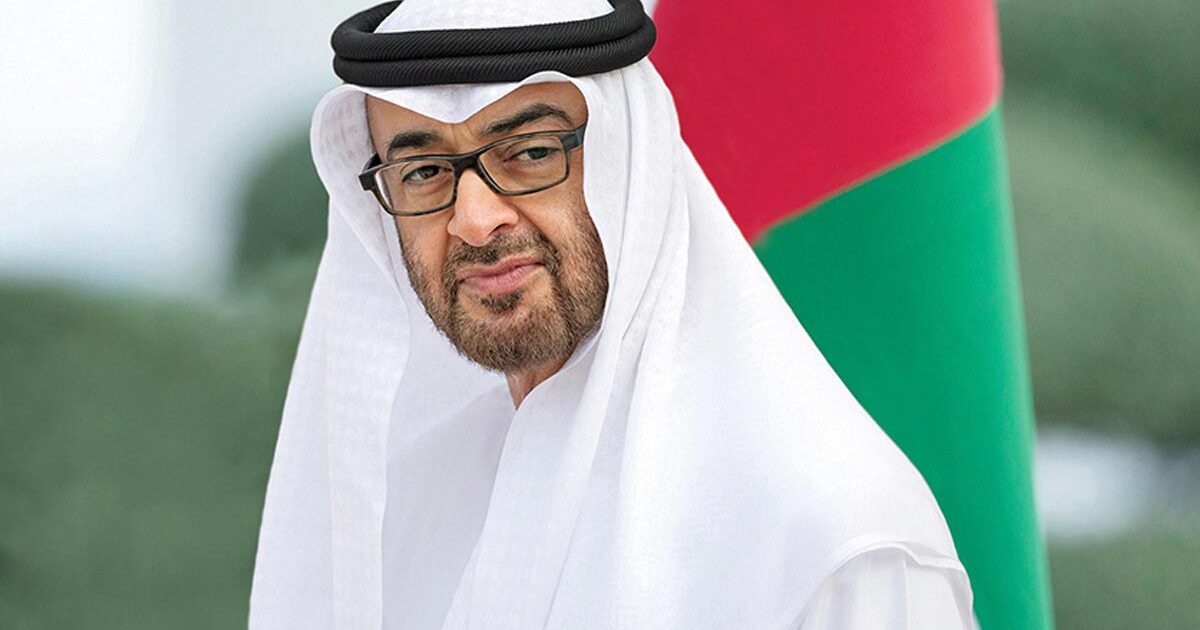

The United Arab Emirates has withdrawn state funding from British universities, citing concerns about the risk of Islamist radicalization on UK campuses—a step that sharply contrasts with the approach taken by many globalist-controlled governments across the Western world.
According to officials familiar with the decision, Abu Dhabi has concluded that the UK’s academic environment poses unacceptable ideological risks to Emirati students.
The move affects government scholarships, a key pathway that has historically sent thousands of Emirati students to elite institutions abroad. British universities, once a top destination, have now been excluded from an official list of approved foreign schools eligible for UAE funding.
When British officials sought clarification, they were told that the omission wasn’t a mistake. The UAE’s message was crystal clear: UK university campuses are no longer considered safe and are increasingly regarded as potential hubs for Islamist radicalization.
Vice President JD Vance commented on the decision after reading about it on X, writing: “Absolutely insane headline. Some of our best Muslim allies in the Gulf think the Islamist indoctrination in certain parts of the west is too dangerous.”
Absolutely insane headline https://t.co/mZRezpmau8
— JD Vance (@JDVance) January 9, 2026
At the heart of the dispute is the British government’s longstanding refusal to ban the Muslim Brotherhood, a radical Islamist movement outlawed across much of the Middle East. Emirati leaders, for years, have warned that the group operates openly in Britain under the cover of academic freedom and civil society protections.
From the perspective of the UAE, Britain—and much of Western Europe’s—distinction between “nonviolent extremism” and outright terrorism is dangerously naive. The government views ideological incubation as the first step toward political Islam gaining institutional power, and universities are seen as prime terrain for that influence.
Recent data reinforces those fears. Figures released by the British government have revealed a sharp rise in university students flagged for potential Islamist radicalization, nearly doubling year over year. While the numbers are small relative to total enrollment, the trend has alarmed foreign governments watching closely.
The UAE’s policy shift comes amid a broader regional crackdown on political Islam, which has often taken radical forms since the Arab Spring. Under President Sheikh Mohammed bin Zayed, the country has pursued an aggressive strategy to neutralize Islamist movements both domestically and abroad, viewing them as existential threats.
The decision carries real consequences. Emirati students attending unapproved institutions run the risk of earning degrees that will not be officially recognized at home, dramatically reducing their value in government or professional sectors.
The impact can be seen in visa statistics, with the number of Emirati students studying in the UK having collapsed over the past three years, falling by more than half since 2022. Federal funding for new students had already been scaled back considerably well before the policy was formalized.
British officials, for their part, have leaned on the usual, tired, globalist talking points. They emphasize academic freedom, campus diversity, and safeguards against extremism. Those reassurances, however, appear to have failed to sway a Gulf state that measures realworld outcomes, not mere rhetoric.
Additionally, the divide exposes a deeper, more significant philosophical rift. While Western elites continue to frame radical Islamist ideology as a marginal issue, governments that are closer to its consequences see it as a long-term civilizational problem—one spreading steathily through institutions that educate future leaders.
Nigel Farage, whose Reform UK party has recently surged in polls, has pledged to ban the Muslim Brotherhood outright. His stance, unsurprisingly has earned praise in the UAE’s leadership.
Over the past few years, relations between the UK and the UAE have grown increasingly strained. Disputes haven’t been limited to education. They’ve extended to media ownership, foreign policy disagreements, and legal battles involving Emirati-owned assets in Britain.
Ironically, even as state-backed scholarships to their schools are cut by foreign countries, British universities continue to expand their operations inside the UAE itself. Campuses in Dubai operated by major UK institutions suggest that Britain’s ‘leadership’ is happy to export education abroad, but wholly unwilling to enforce ideological boundaries at home.
The post UAE Cuts State Funding for Students Studying in UK Over Fears of Islamist Radicalization on British Campuses appeared first on The Gateway Pundit.