


There were a number of good reasons for U.S. intervention in Venezuela. Widespread and unnecessary poverty caused by socialism, repression by the Maduro regime, and an election stolen from roughly 80 percent of the population that wanted Maduro gone were all strong reasons for U.S. actions in Venezuela. But there is also a significant U.S. national security case for involvement, including narco-trafficking networks, transnational criminal organizations operating out of Venezuela from Colombia and elsewhere, and terrorist organizations, including Iran’s Islamic Revolutionary Guard Corps (IRGC).
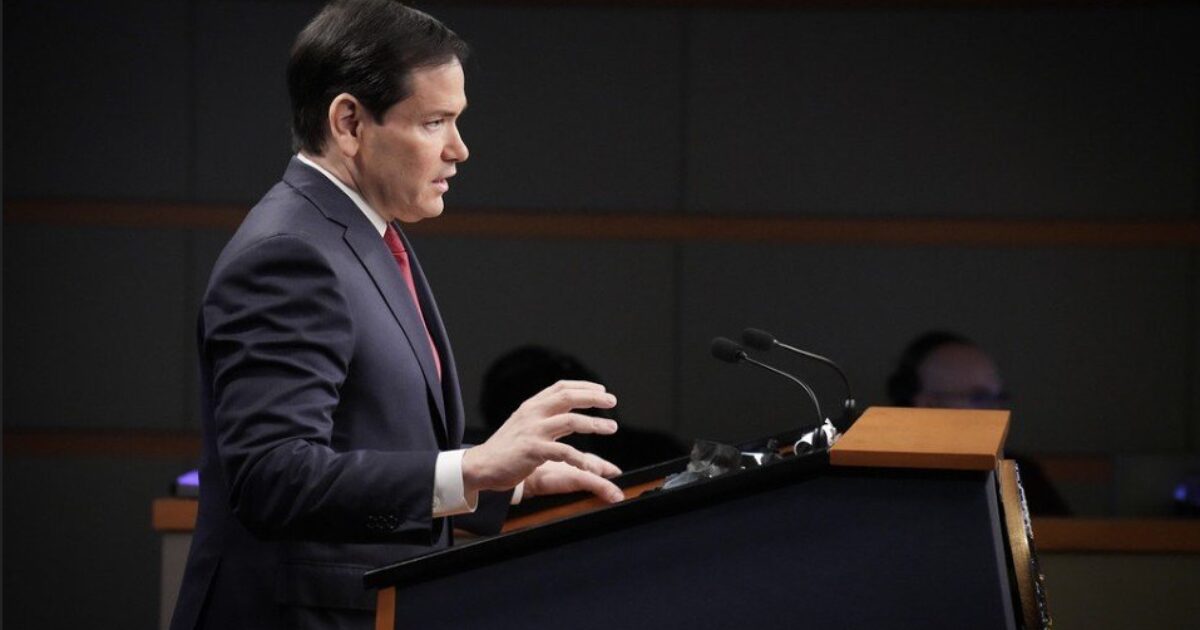
Marco Rubio defended the Trump administration’s military operation to arrest Venezuelan strongman Nicolás Maduro by arguing that the United States holds decisive leverage over Venezuela through an oil quarantine that targets the regime’s primary source of power. Speaking on Face the Nation, Rubio said Venezuela’s oil industry is substandard and in need of major rehabilitation, while stressing that oil revenues do not reach the population but are instead stolen by elites at the top, fueling widespread poverty.
Venezuela’s July 28, 2024 presidential election was widely denounced as stolen after the government-controlled electoral authority declared Nicolás Maduro the winner despite overwhelming evidence to the contrary. The opposition collected and published tally sheets from roughly 80 to 85 percent of polling stations showing a landslide victory for Edmundo González, a result supported by exit polls, independent statistical analysis, and election observers, while international bodies including the Carter Center said the vote lacked transparency and did not meet democratic standards.
Maduro nevertheless certified the results in his favor, blocked oversight, and responded to post-election protests with mass arrests and lethal repression, cementing broad international recognition that the election outcome was fraudulent.
He explained that the regime depends on oil income to survive and that the U.S. uses court orders to seize sanctioned oil shipments, a pressure tool he described as substantial and ongoing until changes occur that advance U.S. national interests and improve Venezuela’s future.
When asked about President Trump’s statement that the United States retains all military options, including ground forces, Secretary of State Marco Rubio said current policy is focused on sanctions pressure rather than occupation. He noted, however, that the president retains constitutional authority to act against imminent threats. Rubio identified priority objectives as stopping drug trafficking, dismantling gang activity, and removing foreign militant groups operating inside Venezuela.
Rubio cited Colombian guerrilla organizations, including the Revolutionary Armed Forces of Colombia, the National Liberation Army, and FARC dissident factions, which have used Venezuelan territory as a long-standing safe haven and drug transit corridor, particularly after Colombia’s 2016 peace talks.
Mexican cartels, including the Sinaloa Cartel, Los Zetas, and CJNG, have also been linked to Venezuelan officials and trafficking routes, while Brazilian crime groups operate in southeastern Venezuela and along the Colombian border. U.S. and regional data indicate that nearly a quarter of global cocaine production transits through Venezuela, with repeated allegations of state complicity enabling these activities.
Venezuela has functioned as a hub for large-scale narcotics trafficking involving both domestic and international organizations. The Cartel of the Suns, a network of senior Venezuelan military and government officials, has been accused by the U.S. of coordinating cocaine shipments since at least 1999, with Maduro identified as its leader in 2025. Tren de Aragua evolved from a prison gang into a transnational criminal organization involved in drug trafficking, human trafficking, kidnapping, extortion, and migrant smuggling, and was designated a Foreign Terrorist Organization by the U.S. in 2025.
Rubio also pointed to the presence of Iran’s Islamic Revolutionary Guard Corps, citing confirmed activity in Venezuela, including military drone production facilities and the 2022 detention in Argentina of a Venezuelan-owned cargo plane carrying Iranian crew members linked to the IRGC and Quds Force. The Iran–Venezuela relationship expanded after a 2022 agreement establishing a 20-year cooperation framework that enabled sanctions evasion, oil-for-gold transactions, and the use of Venezuela as a base for Iranian influence in the region.
Hezbollah has maintained an extensive criminal-terror network tied to Venezuela, with operations spanning narcotics trafficking, money laundering, gold smuggling, training camps, and the use of Venezuelan financial institutions. U.S. authorities have accused senior Venezuelan officials, including former vice president and petroleum minister Tareck El Aissami, of corruption and drug trafficking linked to Hezbollah.
Hamas activity in Venezuela has been less extensively documented, but intelligence officials and opposition leaders have stated that the regime has allowed terrorist groups, including Hezbollah and Hamas, to operate freely.
On the question of Venezuela’s legitimate leadership, Rubio acknowledged his previous statements recognizing opposition leader Edmundo González as the rightful president following the disputed 2024 election. He expressed “tremendous admiration” for González and María Corina Machado, whose party won that election.
However, he drew a distinction between electoral legitimacy and the administration’s immediate mission, which he said focuses on neutralizing threats to U.S. national interests rather than imposing an instant political transition.
The administration is now working with Delcy Rodríguez, whom President Trump indicated has been sworn in as Venezuela’s interim leader. Rubio contrasted Rodríguez with Maduro, saying the former dictator “never kept any deal he made” and “made a fool of the Biden administration” during previous negotiations. He said the administration offered Maduro multiple opportunities to remove himself peacefully, but he refused. “Now he’s in New York,” Rubio said, facing justice in U.S. courts.
When questioned about the apparent contradiction between recognizing the opposition’s electoral victory and engaging with regime insiders, Rubio called for realism. “They’ve had this system of Chavismo in place for 15 or 16 years, and people are asking why, 24 hours after Nicolás Maduro was arrested, there isn’t an election scheduled for tomorrow. That’s absurd,” he said. He emphasized that transitions take time and that while the United States expects Venezuela to move toward fundamental change, it will not happen overnight.
Rubio concluded by outlining the administration’s broader policy objective. “In the 21st century, under the Trump administration, we are not going to have a country like Venezuela in our own hemisphere serving as a crossroads for Hezbollah, Iran, and every other malign influence in the world,” he said. “That’s just not going to exist.”
The administration says it will continue leveraging the oil quarantine and other tools to protect U.S. interests while monitoring whether Venezuelan leaders take concrete steps to address drug trafficking, gang activity, and foreign malign influence in the Western Hemisphere.
The post Colombian Narcos and International Terrorists: The National Security Case for a U.S. Venezuela Operation appeared first on The Gateway Pundit.